

Fiber Laser Marking Uses: Applications & Materials
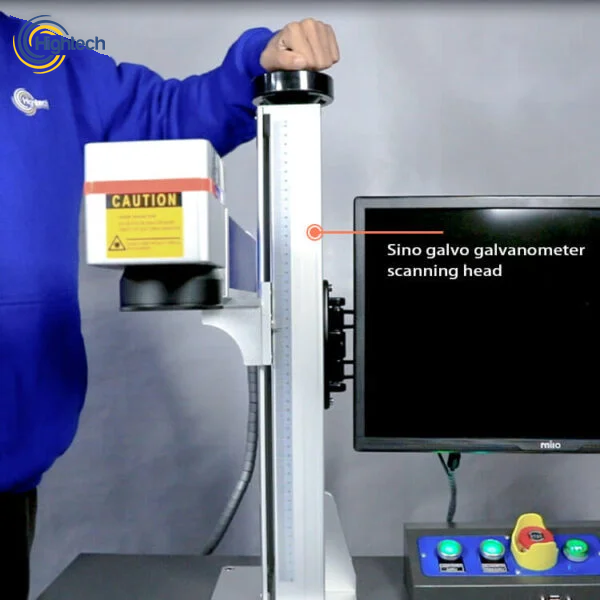
Table of Contents
Fiber laser marking is used to apply serial numbers, barcodes, Data Matrix codes, logos, and other identification directly to compatible parts. Common applications include automotive components, electronic housings, industrial tools, medical instruments, and jewelry.
The right result depends on more than the industry name: material composition, surface finish, mark depth, contrast, and subsequent processing all matter. Fiber lasers are particularly useful for metals and selected plastics, but one configuration will not produce the same result on every surface.
What Is Fiber Laser Marking?
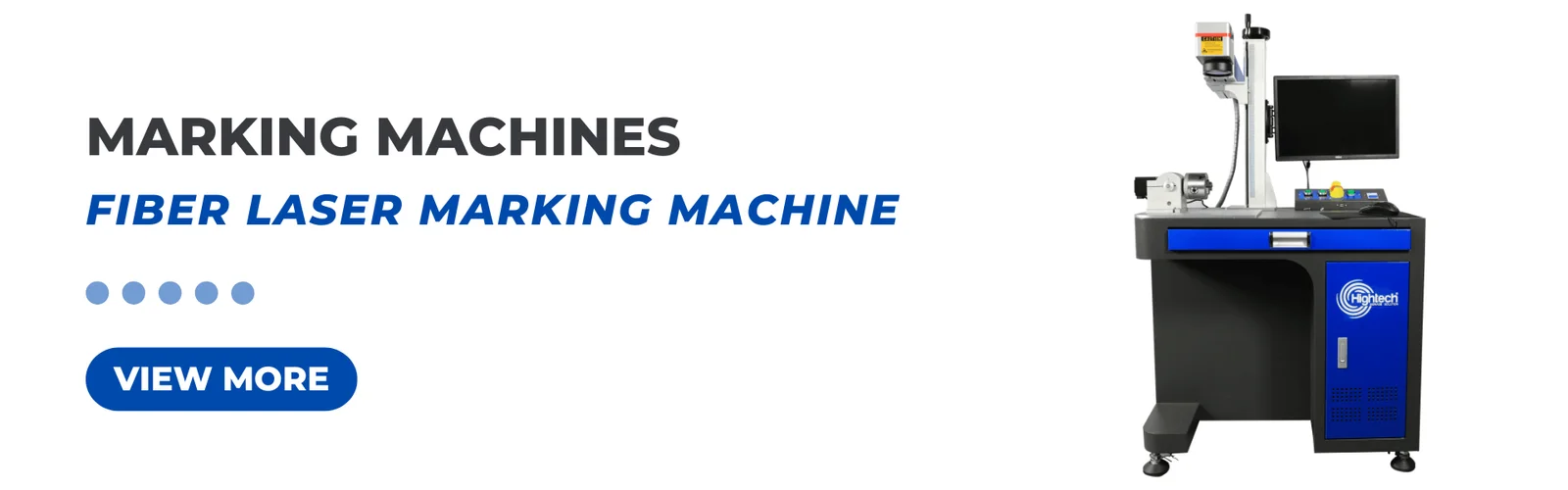
Fiber laser marking is a high-precision method that uses a focused laser beam to engrave, etch, or mark various materials. Unlike traditional marking methods, it doesn’t require ink or physical contact.
The laser beam interacts with the surface to create text, serial numbers, barcodes, or logos. Depending on the material and process, the mark may involve a color change, surface modification, or material removal.
How Does Fiber Laser Marking Work?
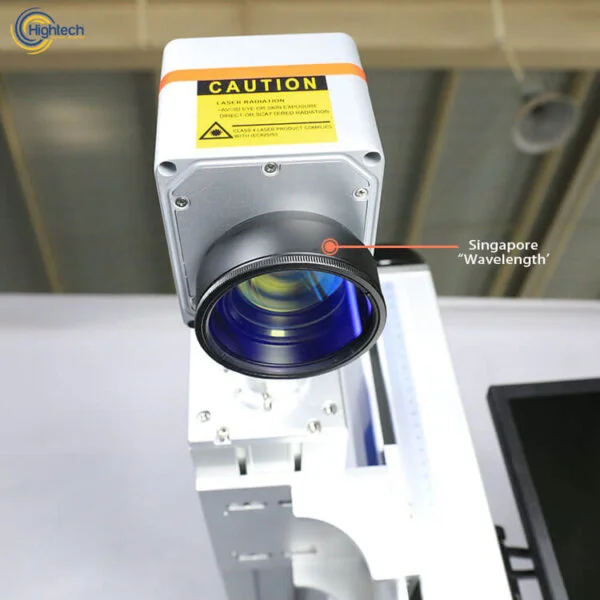
In a fiber laser marking system, the laser marking source generates the beam, scanning mirrors direct it across the artwork, and a lens focuses it onto the workpiece.
The laser’s energy alters the surface material through:
- Annealing: Creating oxide-related color changes on suitable metals, such as stainless steel and titanium, without engraving a recess.
- Engraving: Removing material to create a recessed mark.
- Coating removal: Removing a surface layer to expose a contrasting layer beneath.
- Color change or foaming: Altering compatible plastics to create contrast.
Laser power, pulse characteristics, scan speed, focus, and the material’s response determine the result. A non-contact process avoids tool pressure, but it can still introduce heat and change the surface.

Industrial Applications of Fiber Laser Marking Machines
Businesses use fiber laser markers for traceability, product information, branding, and functional markings. The application should define both the information to be marked and the conditions in which it must remain readable.
Fiber Laser Marking in the Automotive Industry
In automotive manufacturing, precision is key. Fiber laser marking machines are used to label engine parts, chassis numbers, sensors, and interior components.
Typical marks include part numbers, batch identifiers, serial numbers, and machine-readable codes. For aluminum or steel components, check readability on the actual cast, machined, coated, or anodized surface and after relevant production steps.
When evaluating traceability on vehicle components, compare laser marking machines for automotive parts by material, mark quality, fixtures, and production-line fit.
Integrated Circuit Industry
Laser marking can identify semiconductor packages and small electronic components with manufacturer information, lot codes, or part numbers. Fiber technology is suitable only where the package material and process tolerate its interaction with the surface.
A small, legible mark does not establish that the component is undamaged. Heat-sensitive packages may require evaluation of another wavelength, such as UV, alongside functional testing.
Electronics Industry
Electronic housings, connectors, and compatible plastic components can carry logos, serial numbers, model information, and QR or Data Matrix codes.
For metal housings, specify whether the mark is applied to bare metal or a coating. For plastics, test the production formulation and color: visually similar polymers can respond differently because of pigments and additives.
Medical Industry
Fiber laser marking can be used for identification on suitable metal medical instruments and components, including direct-part codes where required.
The marking process must be validated for the device’s intended use, including relevant cleaning, reprocessing, corrosion, and readability requirements. Laser marking does not itself make a device sterile, prove biocompatibility, or establish regulatory compliance.
UDI requirements vary by market and device. Where direct marking applies, the identifier, format, location, and durability must meet the applicable requirements.
Jewelry and Accessories Industry
For jewelry, watches, and luxury items, fiber laser marking provides fine engraving. Logos, serial codes, or custom designs can be applied to gold, silver, and stainless steel surfaces, adding authenticity and elegance.
Applications include personalization on rings, pendants, watch components, and metal accessories. Surface finish, available marking area, and acceptable material removal determine the suitable process.
What Materials Can Be Marked by a Fiber Laser Marking Machine?
Fiber laser marking is widely used on metals and selected nonmetals. Compatibility must be checked for the actual grade, coating, and required appearance.
| Material or surface | Typical marking uses | Main consideration |
|---|---|---|
| Stainless steel | Part identification, instrument codes, logos | Contrast, surface condition, corrosion performance |
| Aluminum and anodized aluminum | Housing labels, serial numbers, nameplates | Bare metal and anodized finishes need different settings |
| Brass, copper, and titanium | Component identification and decorative marks | Material response and required finish |
| Gold and silver | Jewelry personalization and identification | Fine detail and acceptable material removal |
| Selected plastics and rubber | Product codes, symbols, branding | Exact formulation, pigments, additives, and heat response |
| Selected ceramics | Identification and surface graphics | Composition and suitability for the selected wavelength |
Marking Metals with Fiber Lasers
Fiber laser marking can produce surface contrast or recessed engraving on compatible metals. Select the process around the intended result: a smooth identifier, a contrasting coating mark, or a deeper mark that remains visible after a specified production step.
For stainless steel, a fiber laser is a practical technology to evaluate for highly legible identification. Annealing can create a dark mark without engraving a recess; engraving is appropriate when controlled material removal is acceptable.
Neither method automatically guarantees corrosion resistance. Validate the actual alloy, finish, settings, and any subsequent passivation or cleaning process. Rough raw surfaces also need a readability test rather than relying on results obtained from a polished sample.
Marking Plastics with Fiber Lasers
Plastic marking requires careful control of laser parameters to prevent melting or deformation.
Some ABS, polycarbonate, and other engineering-plastic formulations can be marked, but the polymer name alone is insufficient to establish suitability. Pigments and laser-sensitive additives affect absorption and contrast.
A fiber laser is not always the best choice for heat-sensitive plastics. Compare wavelengths on the actual part where excessive heating, low contrast, or surface damage limits the result.
PVC should not be treated as a routine laser-markable plastic because laser processing can release hazardous and corrosive emissions. Confirm material composition and the permitted processing method before testing.
Carbon Fiber and Composites
Carbon fiber materials are strong yet sensitive to heat. They should not be assumed suitable for routine fiber laser marking.
The resin and reinforcement require separate consideration, and laser processing may create hazardous emissions or compromise the surface. Use a qualified identification method approved for the specific composite and component.
Special Uses of Fiber Laser Marking Machines
Beyond traditional industrial applications, fiber laser marking machines are also used for advanced and creative purposes. Their ability to produce deep, colored, or high-contrast marks allows manufacturers and designers to achieve unique visual effects on metals and other materials.
These effects require a compatible laser source and a tested process; they are not standard capabilities of every fiber marker.
Black Marking on Aluminum
Black marking on suitable anodized aluminum can be achieved with an appropriately configured MOPA fiber laser. Pulse control and the anodized finish affect the result.
Bare aluminum is a different application. Do not assume that settings or samples from anodized material establish black-marking performance on raw aluminum.
Color Marking on Metal
Advanced fiber lasers can produce colored oxide layers on stainless steel and titanium, creating rainbow-like patterns. These aesthetic color marks are popular in decorative metalwork and premium branding.
Color depends on the material, surface preparation, and laser settings. Approve repeatability on representative parts before specifying a particular appearance.
Black Marking on Metal
On suitable stainless steel and titanium, controlled heating can create dark annealing marks. Other black-marking processes use different surface effects, including ultrashort-pulse surface structuring.
A dark appearance alone does not prove a smooth surface, unchanged material properties, or corrosion resistance.

How to Choose the Right Fiber Laser Marking Machine?
Selecting the right machine depends on several factors:
- Material Type: Different models are optimized for metals, plastics, or mixed materials.
- Laser Source and Pulse Control: Match the source to the required contrast, depth, and surface effect; wattage alone is insufficient.
- Marking Area: Choose a lens and working field that accommodate the mark and required detail.
- Software Compatibility: Ensure the system supports vector graphics, barcodes, and automation features.
- After-Sales Support: Reliable maintenance and technical training are key for long-term performance.
A good strategy is to test your material samples before purchase to ensure marking quality and contrast. Include the actual text or code and check it after relevant finishing or cleaning steps.
For a broader technology comparison, see our guide to industrial laser marking machines.
Compare our laser marking machines by material compatibility, required mark quality, and production needs before selecting a system.
Final Thoughts: What You Really Need to Know About Fiber Laser Marking
Fiber laser marking technology offers a clean, efficient, and highly adaptable solution for permanent marking needs. Its ability to work on metals, plastics, and composites—without consumables or extensive maintenance—makes it a long-term investment for modern manufacturing. Whether for traceability, branding, or decorative applications, the fiber laser marking machine delivers precision, speed, and durability unmatched by traditional methods.
Frequently Asked Questions
Can fiber laser marking be done without metal deformation?
A controlled process can limit visible distortion, and annealing can avoid material removal. However, non-contact marking is not automatically free from thermal effects. Test thin sections, precision surfaces, and heat-sensitive parts against their dimensional and surface requirements.
Can stainless steel be laser marked before welding?
The marking location and production sequence matter. If marking occurs before welding, inspect it after welding and any subsequent cleaning or finishing. Approve the final readability and surface condition rather than only the initial mark.
Find the Right Machine for Your Application
Latest contents


Prefer a callback? Share your details and requirements below.
Your details will only be used to respond to this request.